Cattle herders with short legs
On Welsh farms, corgis moved cattle by nipping at their heels, and their low height helped them duck under kicking hooves. There are two separate breeds: the Pembroke, the more common one, usually with a short or no tail, and the Cardigan, which has a long tail and is the older of the two.
Personality: smart, alert and a little bossy
Corgis are intelligent, affectionate and eager to be involved in everything. Their herding instinct is still strong, so some will try to round up children, other pets or guests by circling or nipping at heels, which training can redirect.
They are also enthusiastic watchdogs with a bark much bigger than their size.
Why they dig
A busy working dog with nothing to do will invent a job, and for many corgis that job is excavation. Loose soil in a plant pot is irresistible to a bored, curious dog.
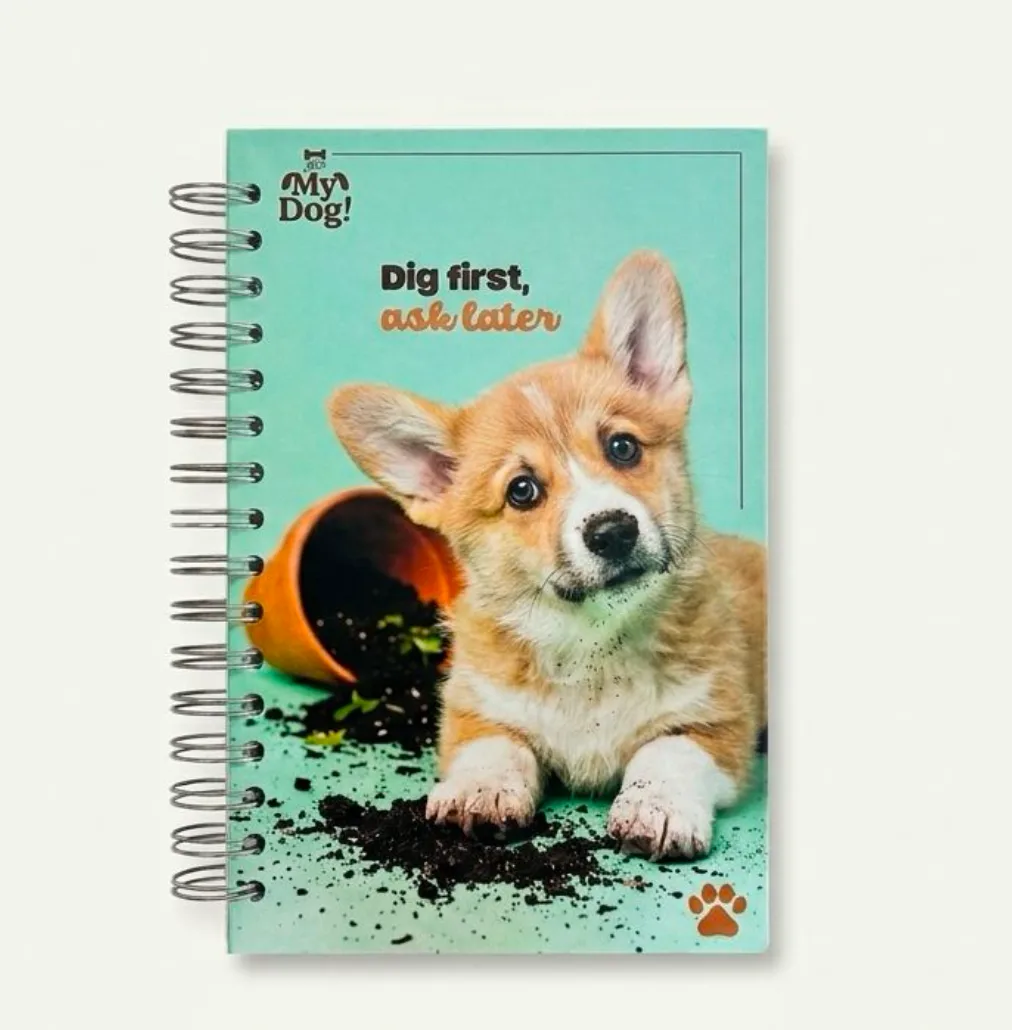
Daily exercise, puzzle toys and training games burn off that energy. Some owners give their corgi a sandbox or a snuffle mat as a legal place to dig. Our Gorki notebook, "Dig first, ask later", is for every corgi who thought the houseplant looked better on the floor.
Living with a corgi
Corgis have a thick double coat and shed a lot, especially when the seasons change, so regular brushing helps. They love food, and extra weight is hard on their long backs, so portion control matters.
They are happiest with a daily walk plus something to think about, like training tricks or herding-style games.
Gift ideas for corgi lovers
A few ideas that fit the breed and the people who love it:
- The Gorki notebook: an A5 spiral hardcover with 100 ruled sheets and a corgi digging up a plant pot ($19.99).
- A good deshedding brush, which corgi owners will thank you for every spring.
- A snuffle mat or dig box to channel all that energy.
- A herding ball, a big sturdy ball that corgis can push around the yard.